Executive Summary
The report provides a longitudinal neighborhood and housing market analysis for the West area, spanning roughly 40 years for demographic trends and 20 years for land use and housing market dynamics. Overall, the West area shows:
Significant racial and income composition shifts
Declining population with rising housing costs
Transition toward higher-value, owner-occupied housing
Increasing housing market pressure and affordability challenges
These trends are consistent with gentrification and market tightening, with implications for housing stability and displacement risk.
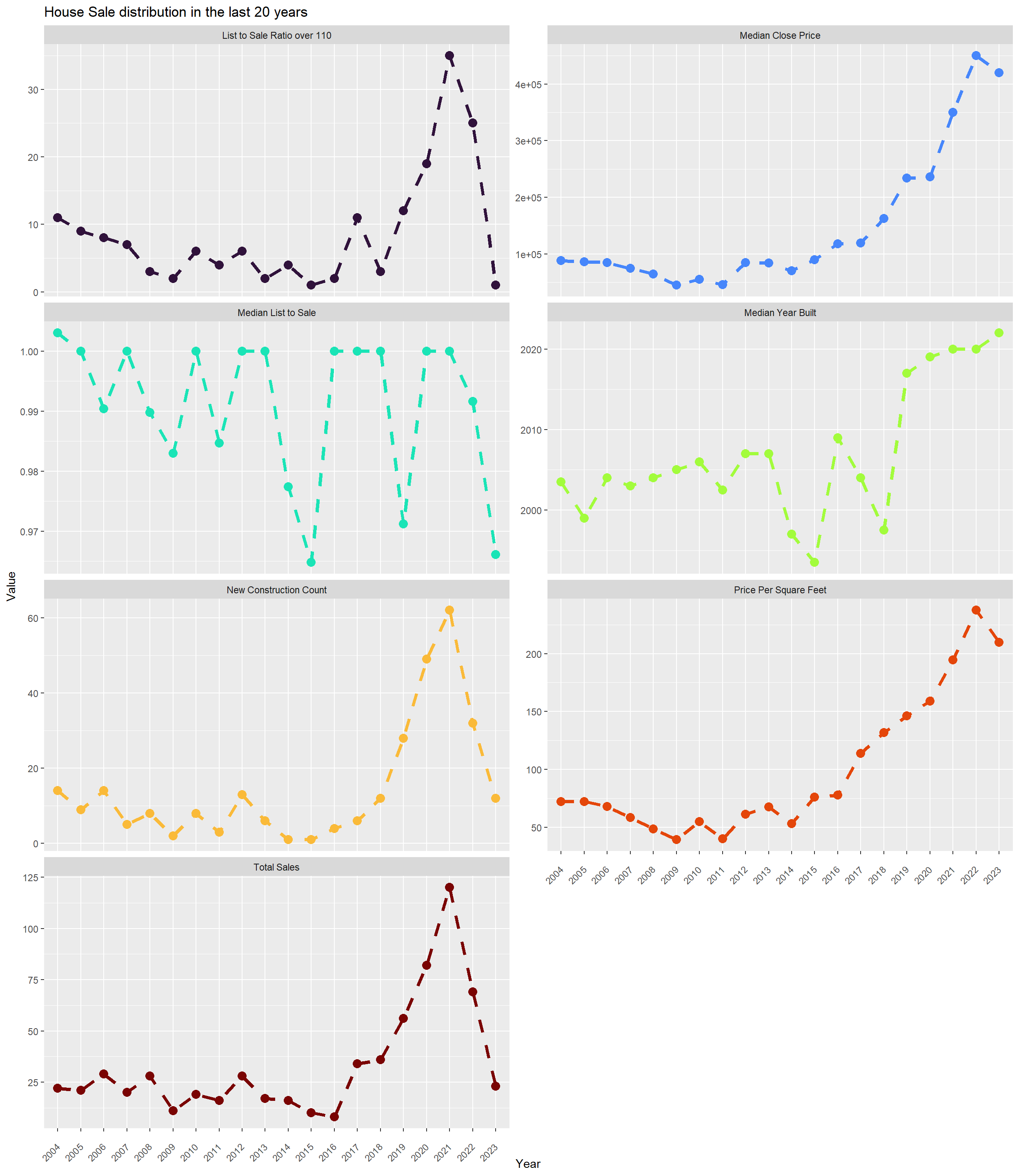
Over the past four decades, the West area has undergone a pronounced demographic and housing transition marked by rising property values, declining renter presence, and a growing share of owner-occupied, single-family housing. Median home values, rents, and price per square foot have increased sharply since the mid-2010s, while total population and renter households have declined. These patterns indicate that housing cost escalation is outpacing resident retention.
Population & Demographics
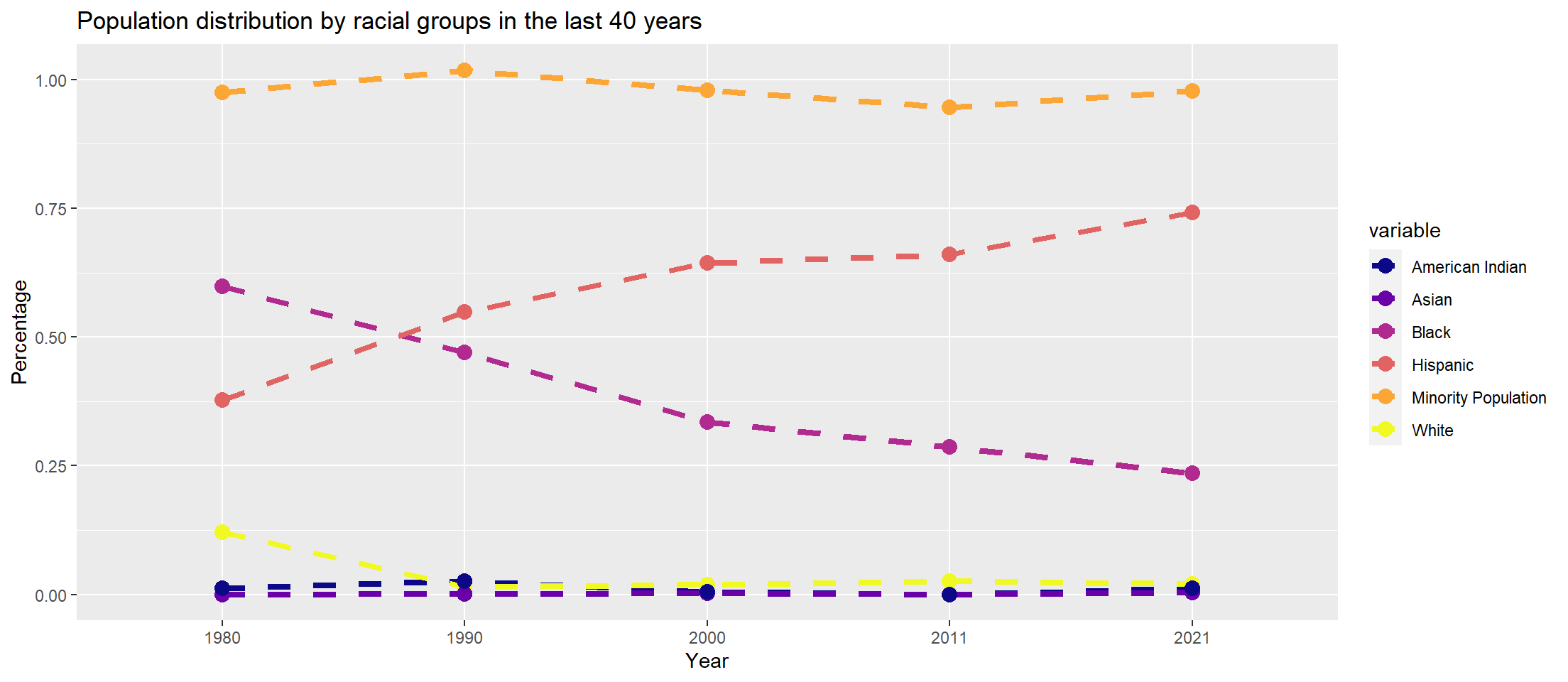
This figure illustrates the long-term shift toward a majority-minority population, driven primarily by growth in the Hispanic population and a decline in the White population share.
Socioeconomic Indicators
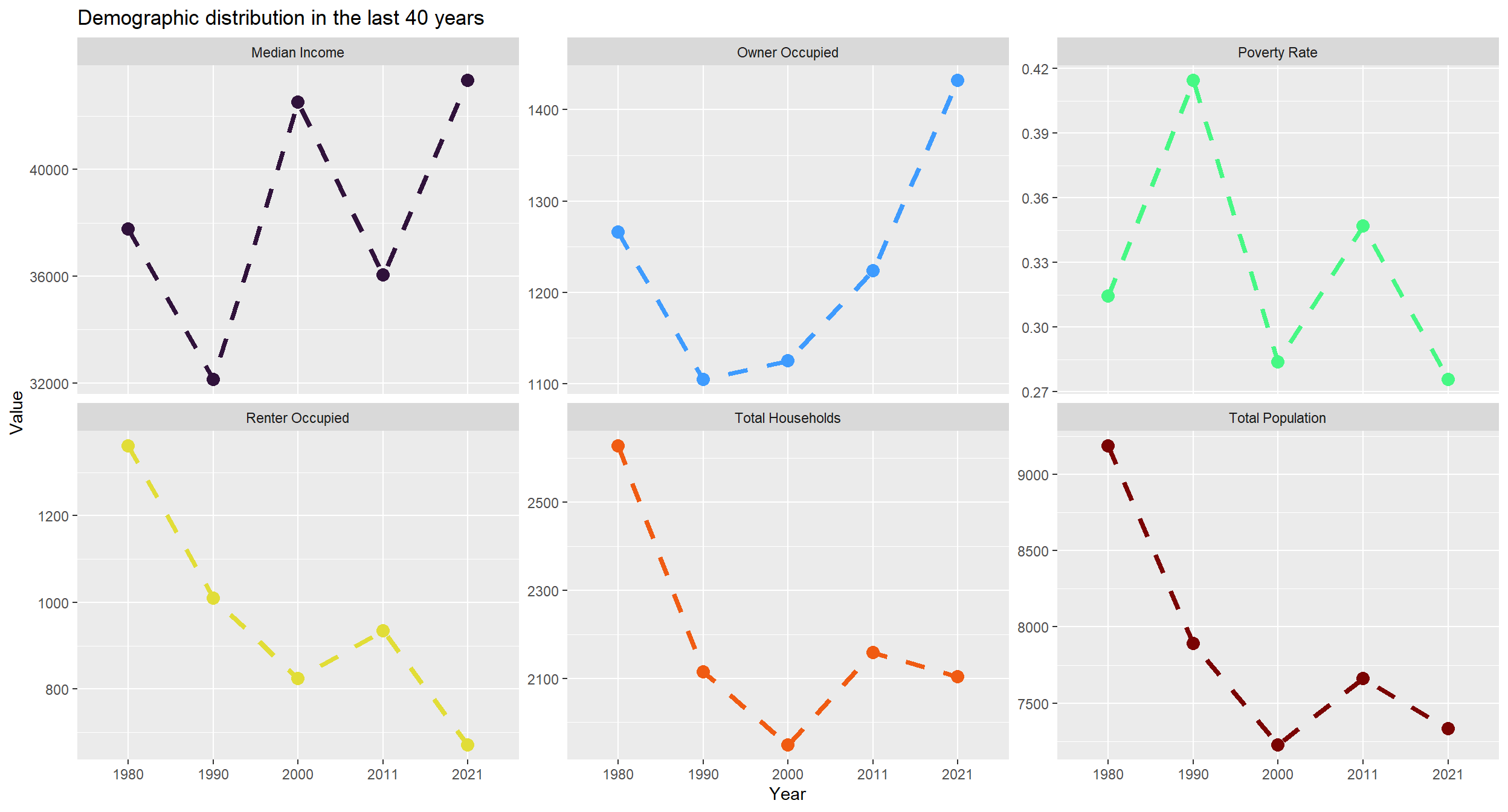
Trends in median income, homeownership, poverty, household count, and population reveal rising housing costs alongside declining population and renter presence.
Household Size, Housing Value, and Tenure Trends
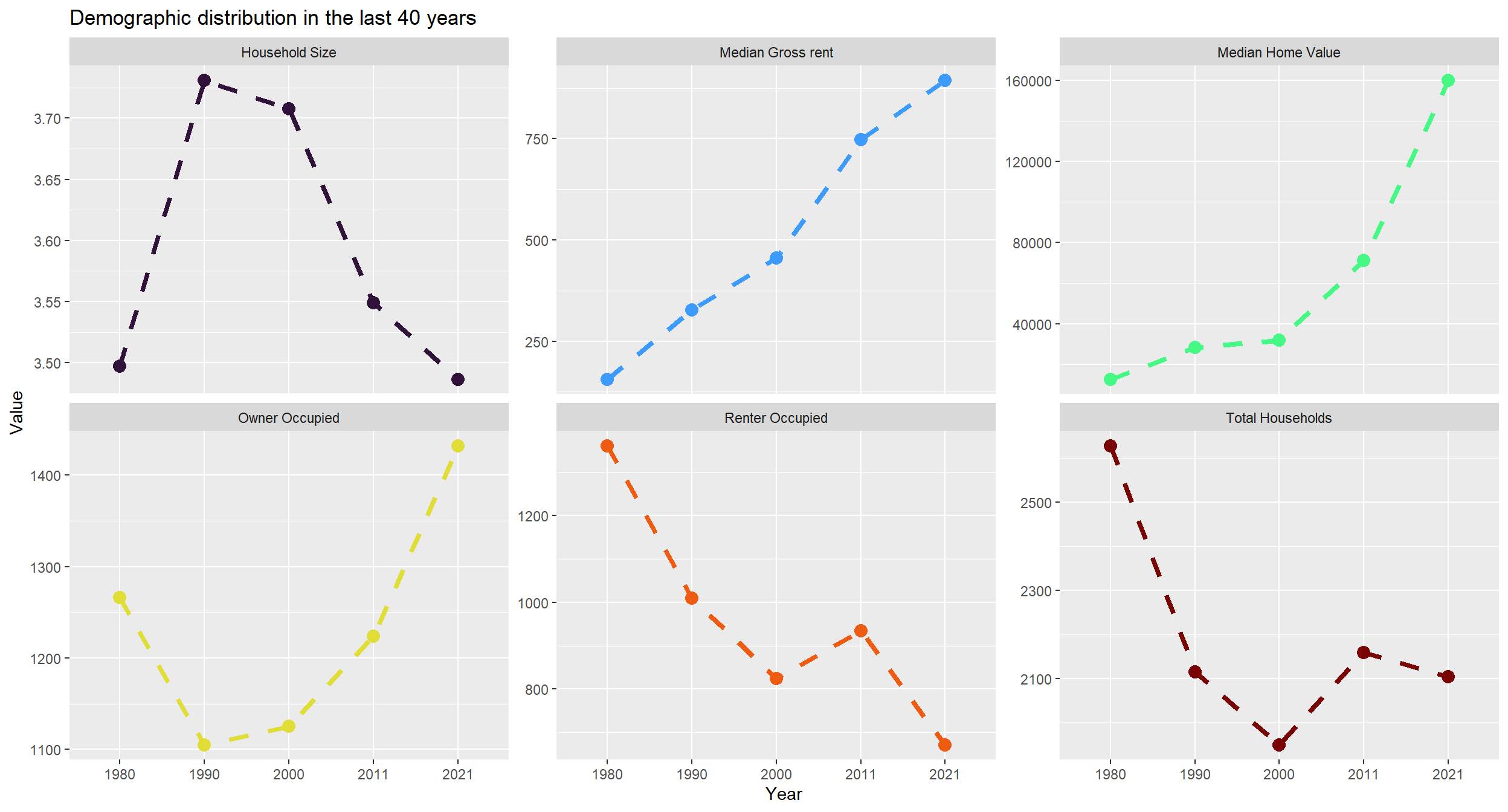
Median home values and rents rise sharply over time, while renter-occupied households decline and owner occupancy increases.
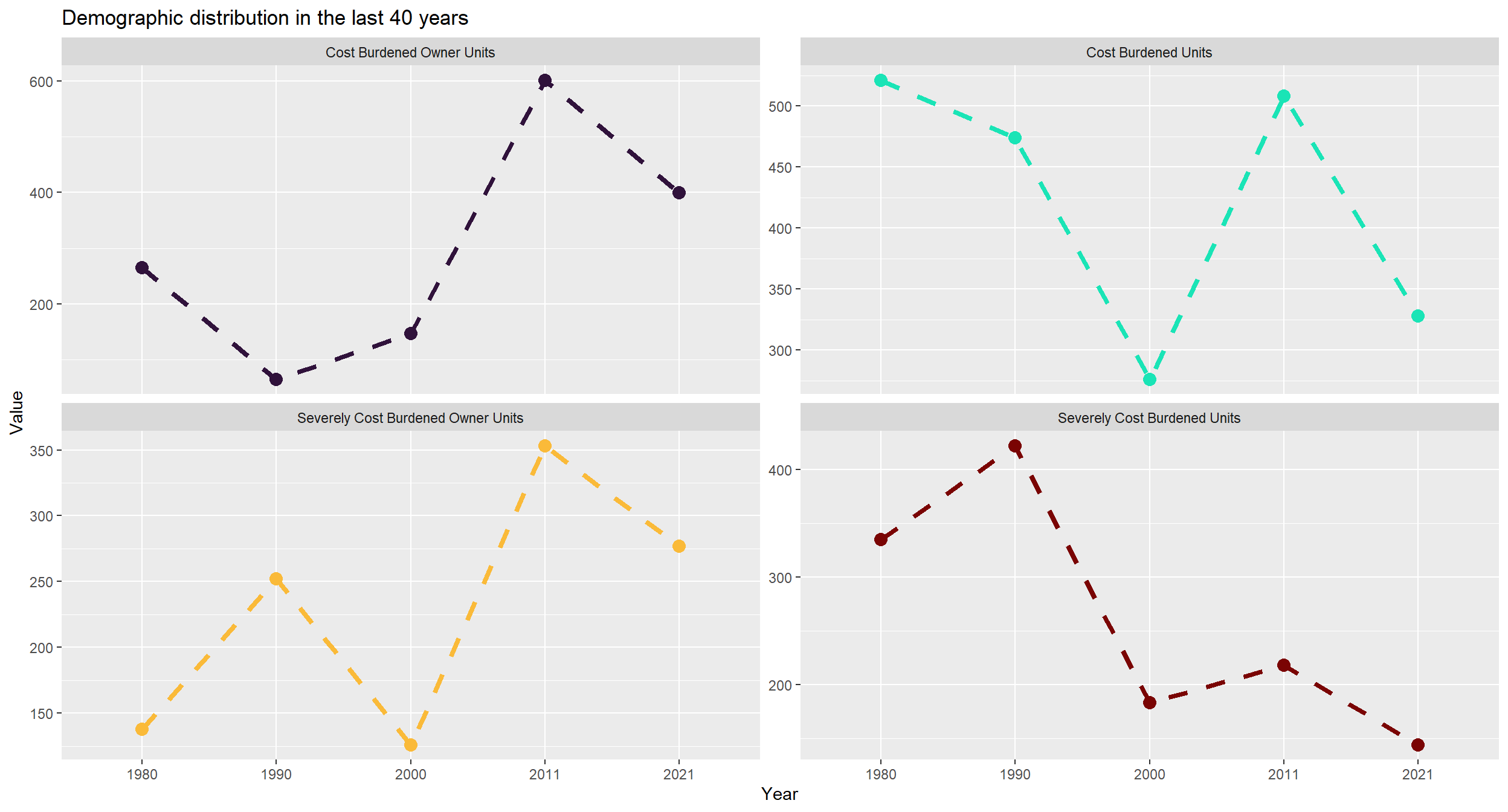
Housing Cost Burden
Cost-burdened and severely cost-burdened households persist, highlighting ongoing affordability challenges despite income growth.
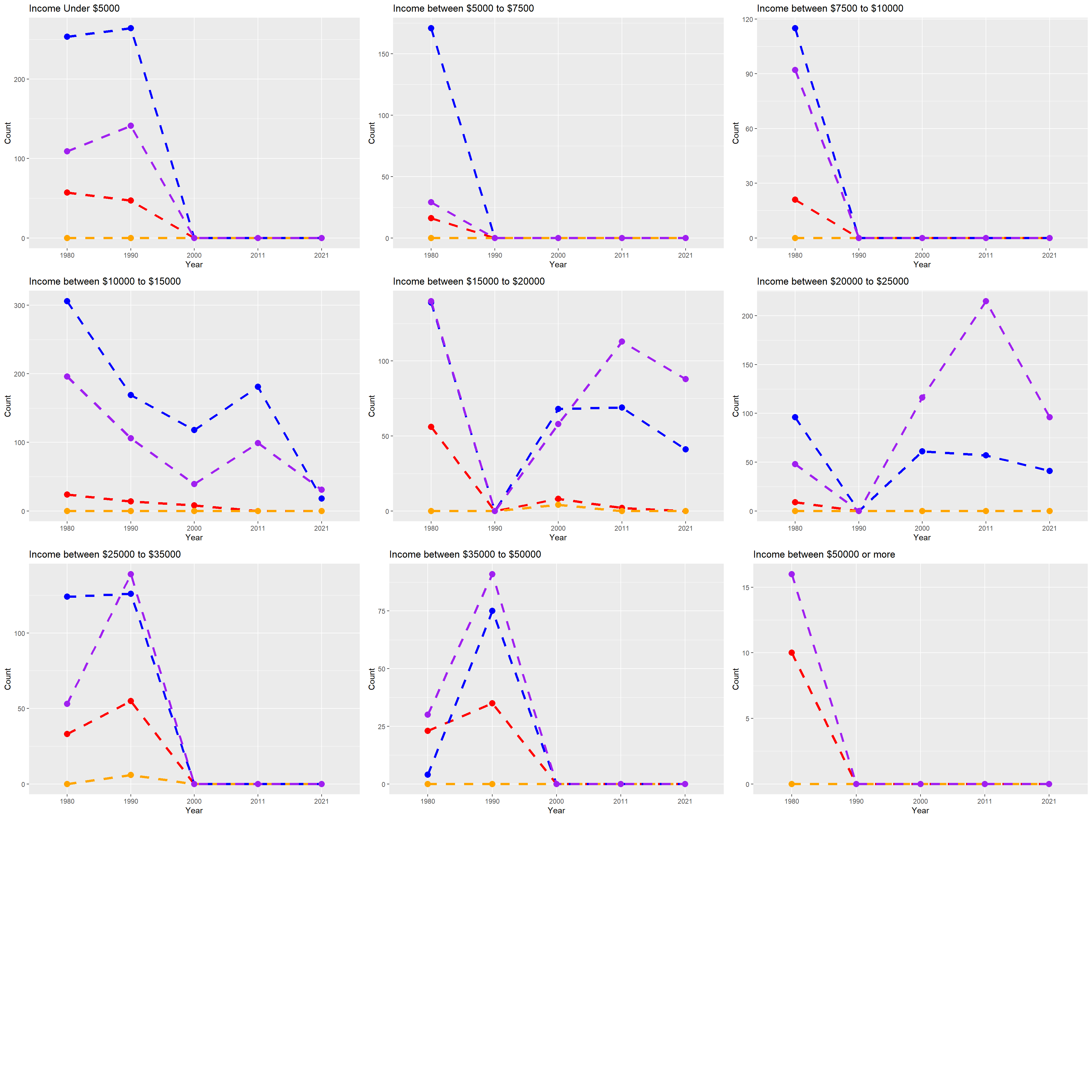
Household Income Distribution by Bracket
Lower-income households decline substantially over time, while higher-income brackets become more prevalent, indicating economic filtering and displacement risk.
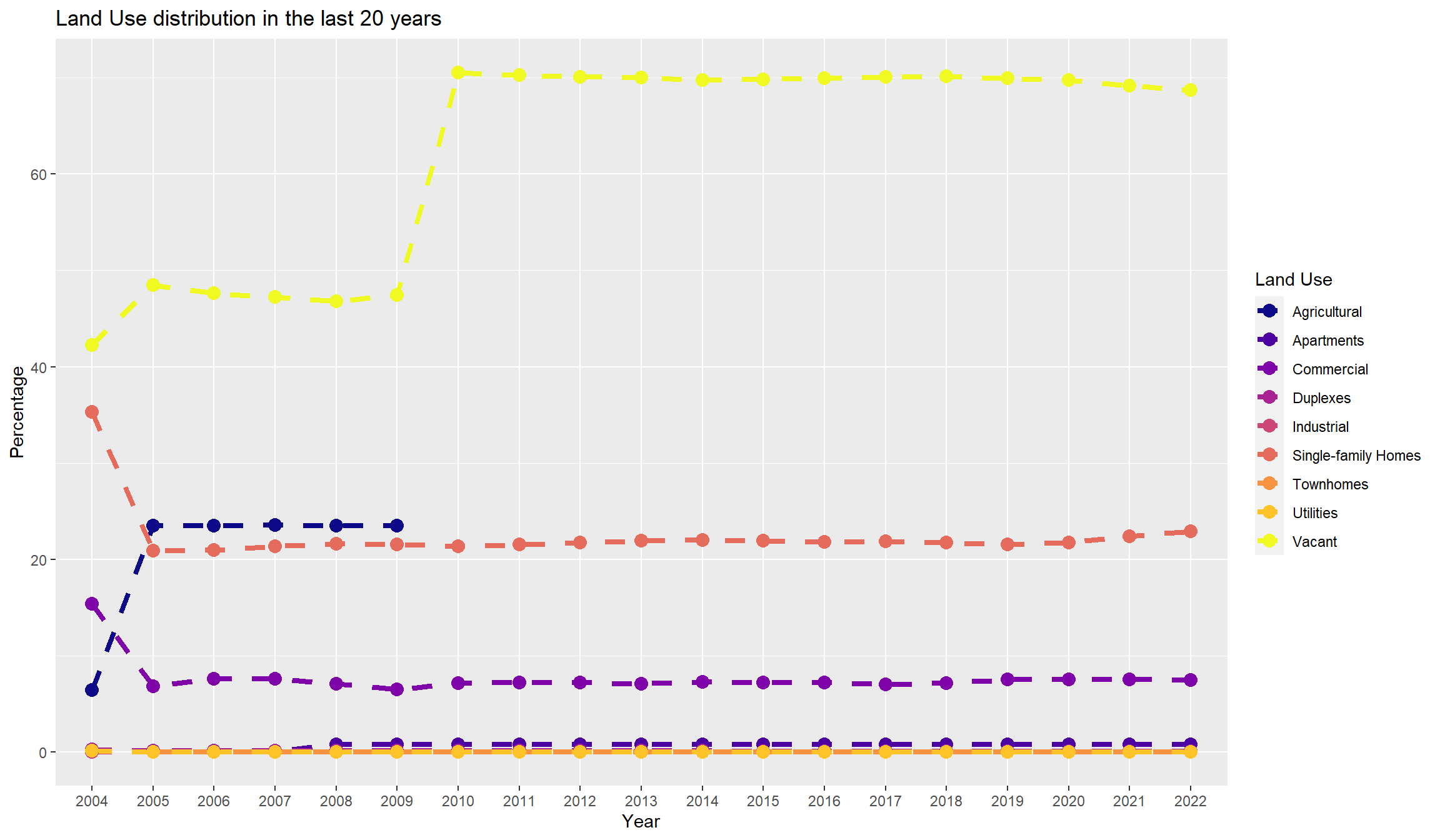
Land Use Distribution
Single-family residential land use dominates development patterns, with limited growth in multifamily or mixed-density housing types.
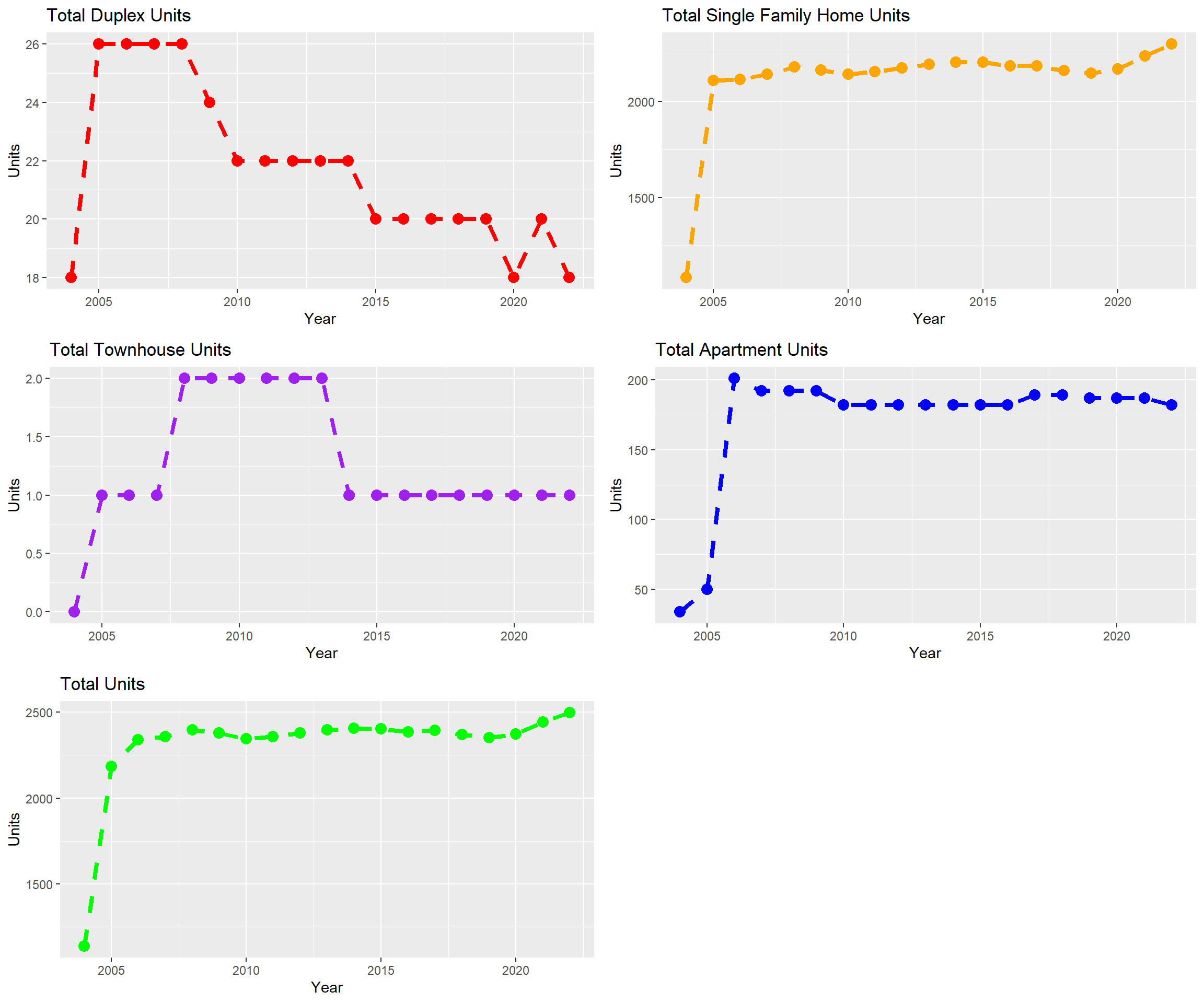
Housing Unit Composition by Type
Growth in housing units is driven primarily by single-family homes, while duplexes and townhomes decline or stagnate.
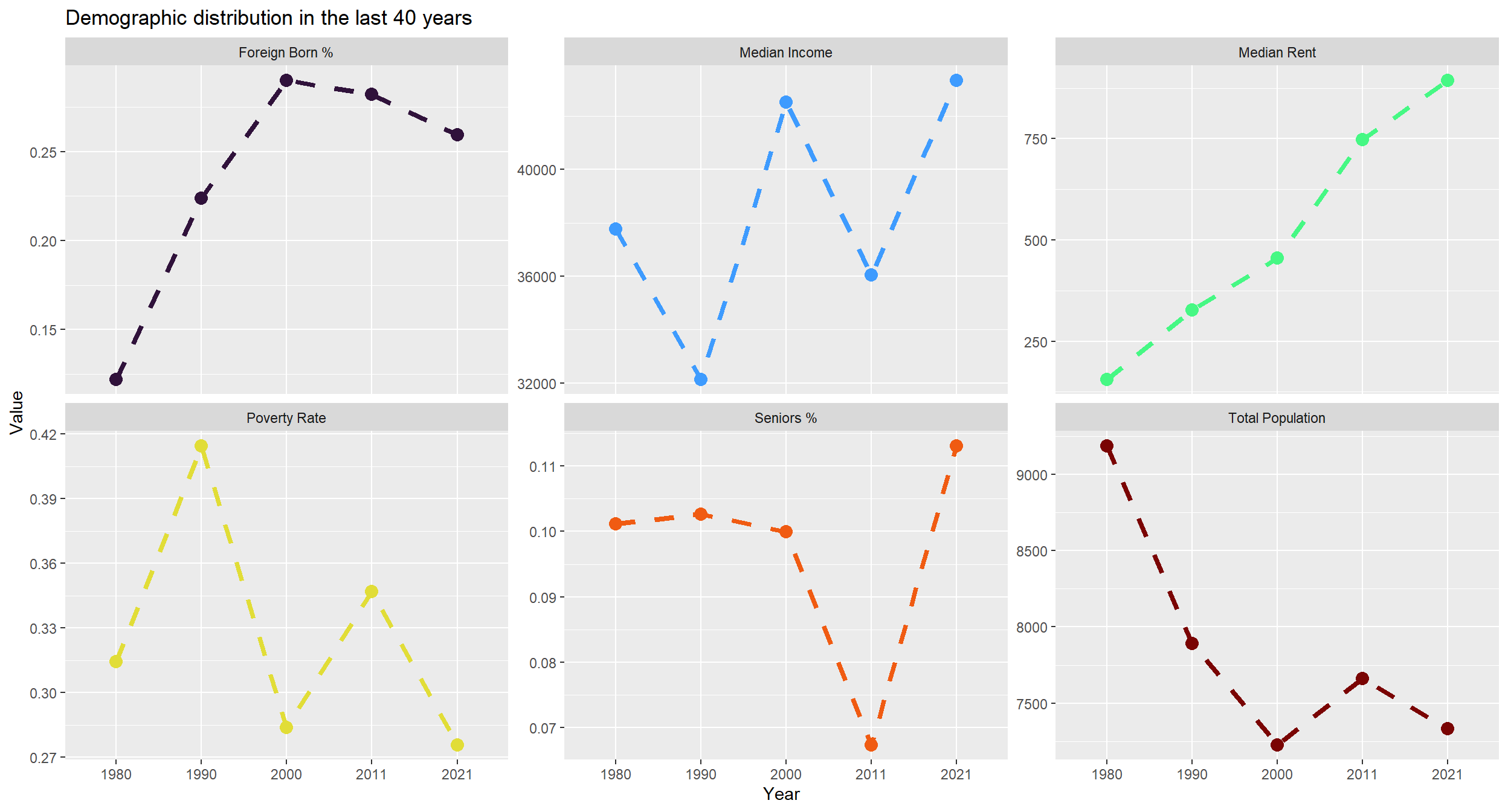
Additional Demographic and Economic Trends
Foreign-born population, senior share, income, rent, and poverty trends reflect an aging population and rising housing costs amid declining population.
Housing Market Dynamics
Rising sale prices, price per square foot, and tight list-to-sale ratios demonstrate an increasingly competitive housing market with limited affordability.